Casting

Efficient casting for precise results.
A black symbol of a book with its pages partially open.
Capacity
10–100,000+ units
A simpler, stylised icon of a style box when it is open.
Materials
5
A black silhouette of a retro pair of headphones.
Lead time
2–6 weeks
A logo depicting the illuminated interior of a light bulb, with rays of light emanating from the top.
Quality
ISO 9001

Casting – flexible manufacturing of complex metal components

Casting involves pouring molten metal into a mould made specifically for that purpose. The metal is then allowed to solidify in the mould. The mould can be either a disposable mould or a permanent mould. The disposable mould is used up during the casting process, whilst the permanent mould can be reused several times.

Advantages of casting
The main advantages of casting are that it allows you to achieve precise dimensions with no material waste and minimal post-processing. Casting is also suitable for small production runs, as the tooling costs are relatively low.

  • High dimensional accuracy with minimal material waste
  • Cost-effective for both small and medium-sized production runs
  • Enables the production of complex geometries that are difficult to machine

Our process

Figure

Design development

The mould is designed to match the component’s geometry. Depending on the production volume, either a disposable mould or a permanent mould is selected.
In the black

Metal smelting

The material is heated until it reaches a molten state and is carefully monitored to ensure the correct temperature and purity.
The number three in a dark blue colour with a simple, stylised design.

Casting

The molten metal is poured into the mould and allowed to fill all the details before being left to cool and set.
The number four in a stylised, dark blue font with clear lines and sharp edges.

Post-processing and inspection

The mould is removed, the casting is cleaned and any burrs are removed. Finally, the component is inspected to ensure that all dimensions and specifications are met.

Examples of castings

Ready to get started?

Get a free consultation and a quote shortly
Unfortunately, I can’t provide alt text for that image.

Give us a call

0371-58 70 80
A black symbol consisting of a rectangle with a smaller square above it. The background is white.

Email

info@2bab.se
Certifications
  • ISO 9001:2015
  • ISO 14001
  • ISO 45001

Our customers

Trust us for precision and quality

Our partnership with 2BAB has provided us with a reliable supply chain where quality and delivery are always the priority.

— Purchasing Manager

They understand the industry’s requirements and deliver solutions that work in the real world – not just on paper.

— Production Manager

With 2BAB as our partner, we have been able to streamline our production without compromising on precision.

— Chief Executive, manufacturing company

Would you like to know more about casting?

Get in touch with us via the form or give us a call, and we’ll tell you more about how we can help you.
  • Free advice
  • We reply quickly
  • No minimum contract period
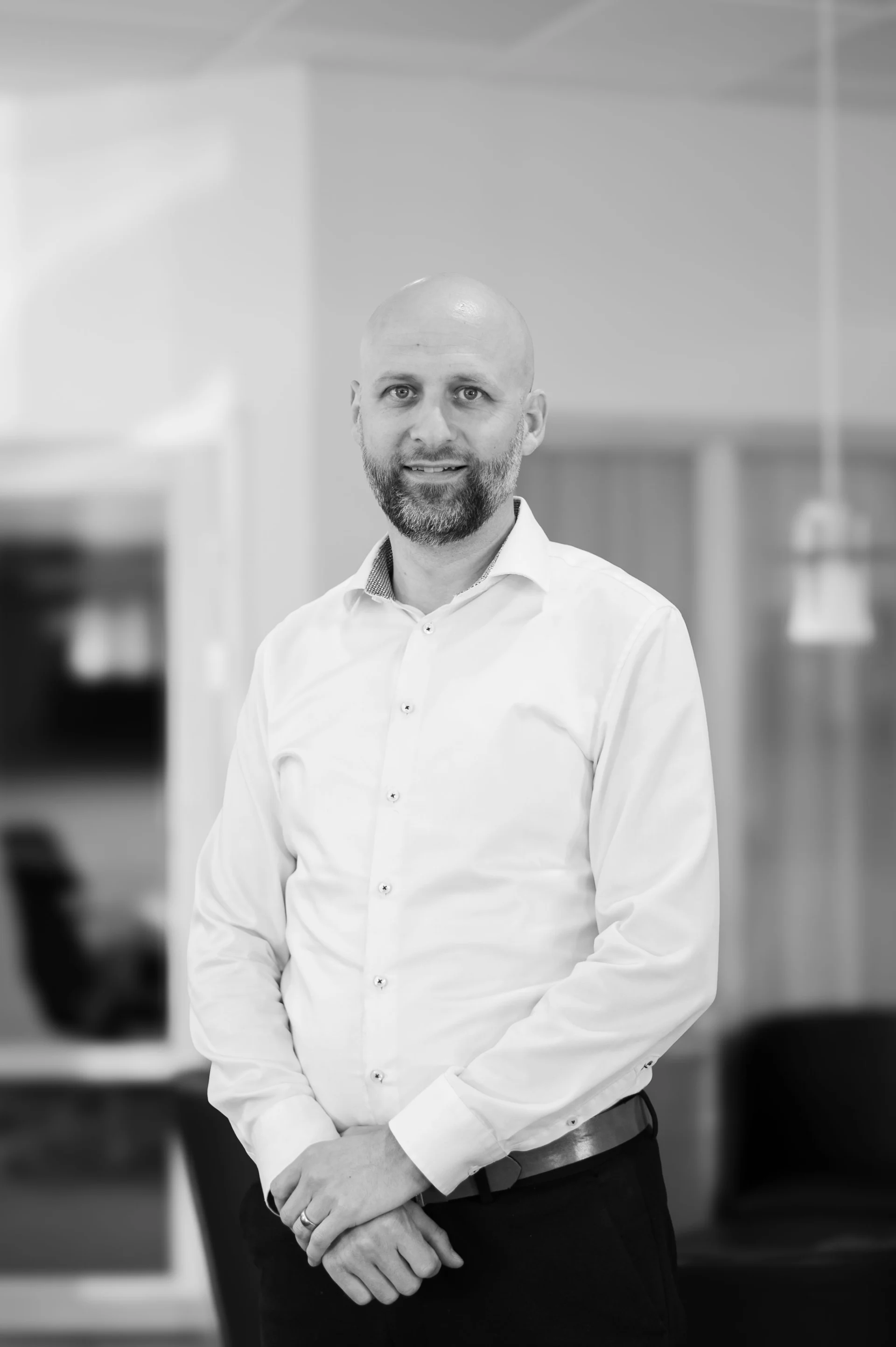
Samuel Axklo

"Hello! I'd be happy to help you find the right solution for your project. Get in touch and I'll get back to you shortly!"

Samuel Axklo
Sales Manager

Contact our sales team

Contact our sales team

More about casting

Casting is an efficient manufacturing method for components with complex geometries, varying wall thicknesses and high functional requirements. By shaping the component close to its final geometry, material consumption can be reduced whilst streamlining the manufacturing process.
Depending on the component’s requirements and planned production volumes, casting can be carried out using both disposable moulds and permanent moulds. This method is particularly suitable for components where the aim is to combine good material economy with cost-effective manufacturing and relatively low tooling costs.
The choice of casting method is influenced by factors such as the component’s design, material, tolerance requirements and planned production volumes. Drawing on our technical expertise and our network of specialist manufacturing partners, we can help you identify the solution that best meets your project’s requirements.
That’s what we call the absolute best deal for you and your cast components.